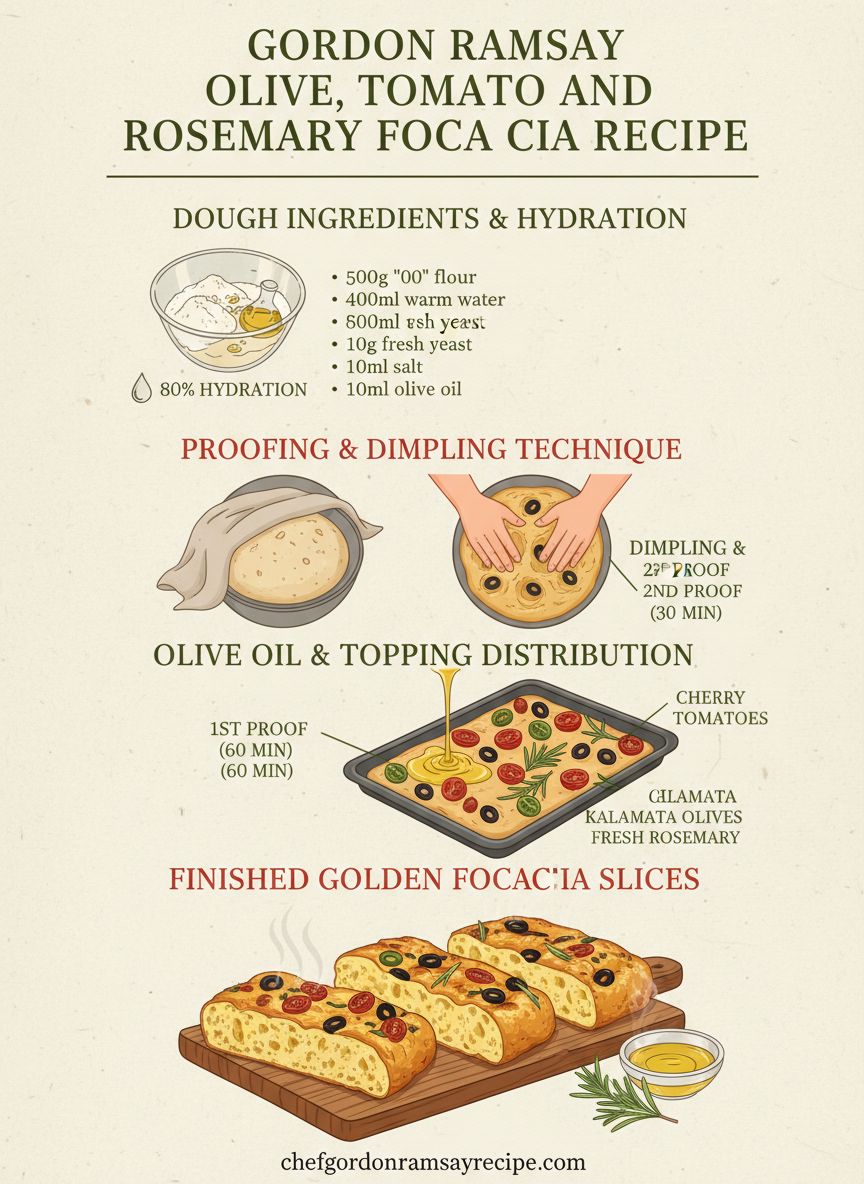
Gordon Ramsay Olive, Tomato and Rosemary Focaccia Recipe
This Gordon Ramsay focaccia recipe delivers a light, airy crumb with a crisp olive-oil crust, topped generously with olives, cherry tomatoes, and fresh rosemary. The dough is gently proofed, dimpled by hand, and baked hot to achieve classic Italian focaccia texture and flavor.
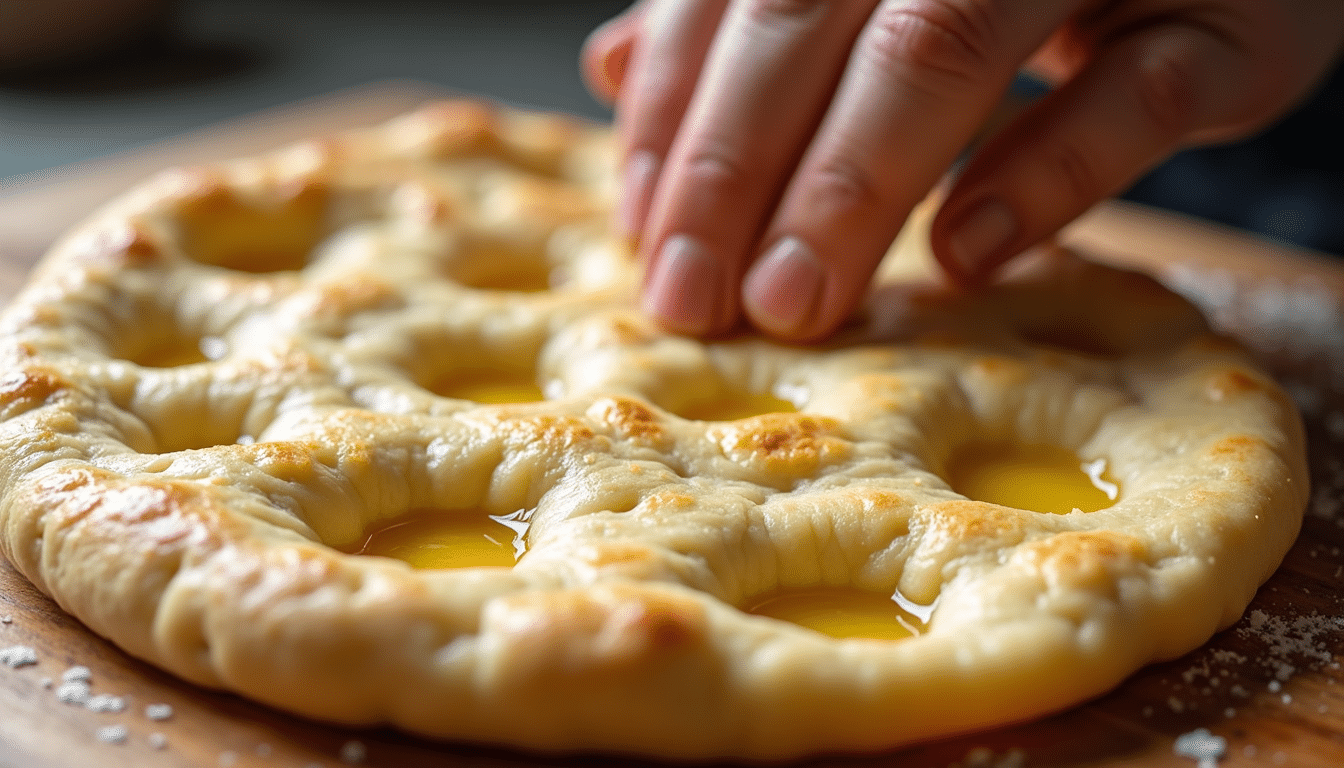
Gordon Ramsay Olive, Tomato and Rosemary Focaccia Recipe
A classic Italian-style focaccia with a soft interior, crisp base, and fragrant toppings of rosemary, olives, and roasted tomatoes—finished with good olive oil and sea salt.
Ingredients
- 500 g strong white bread flour
- 7 g fast-action dried yeast
- 1½ tsp fine sea salt
- 325 ml warm water
- 4 tbsp extra-virgin olive oil (plus more for baking)
- Cherry tomatoes, halved
- Black or green olives, pitted
- Fresh rosemary sprigs
- Flaky sea salt, for finishing
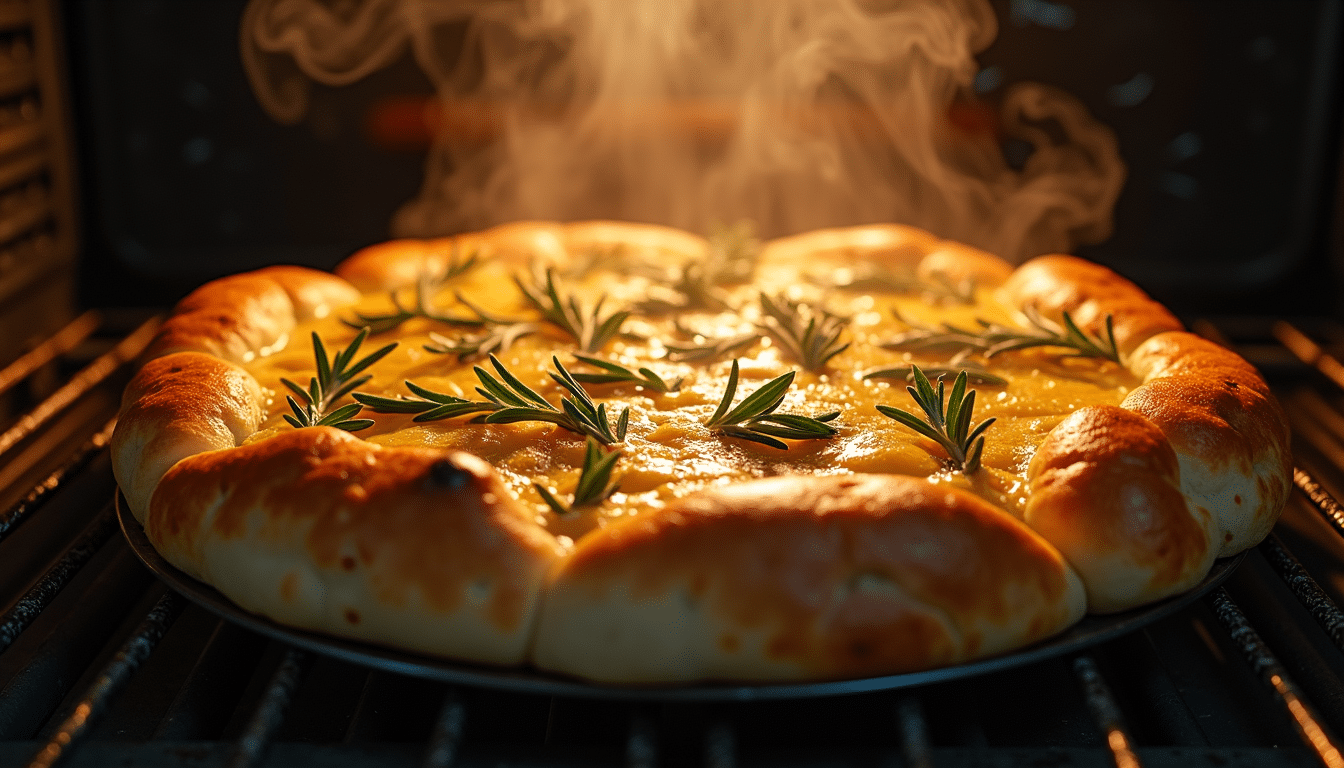
Method
- Combine flour, yeast, and salt in a large bowl. Add warm water and olive oil, then mix until a sticky dough forms.
- Knead on a lightly oiled surface for 8–10 minutes until smooth and elastic. Place in an oiled bowl, cover, and let rise until doubled in size.
- Lightly oil a baking tray. Tip the dough onto it and gently stretch to fill the tray without knocking out too much air.
- Use your fingertips to dimple the dough all over. Scatter olives, tomatoes, and rosemary evenly across the surface.
- Drizzle generously with olive oil and sprinkle with flaky sea salt. Leave to prove again until slightly puffed.
- Bake in a preheated oven at 220°C / 425°F for 20–25 minutes until golden and crisp underneath.
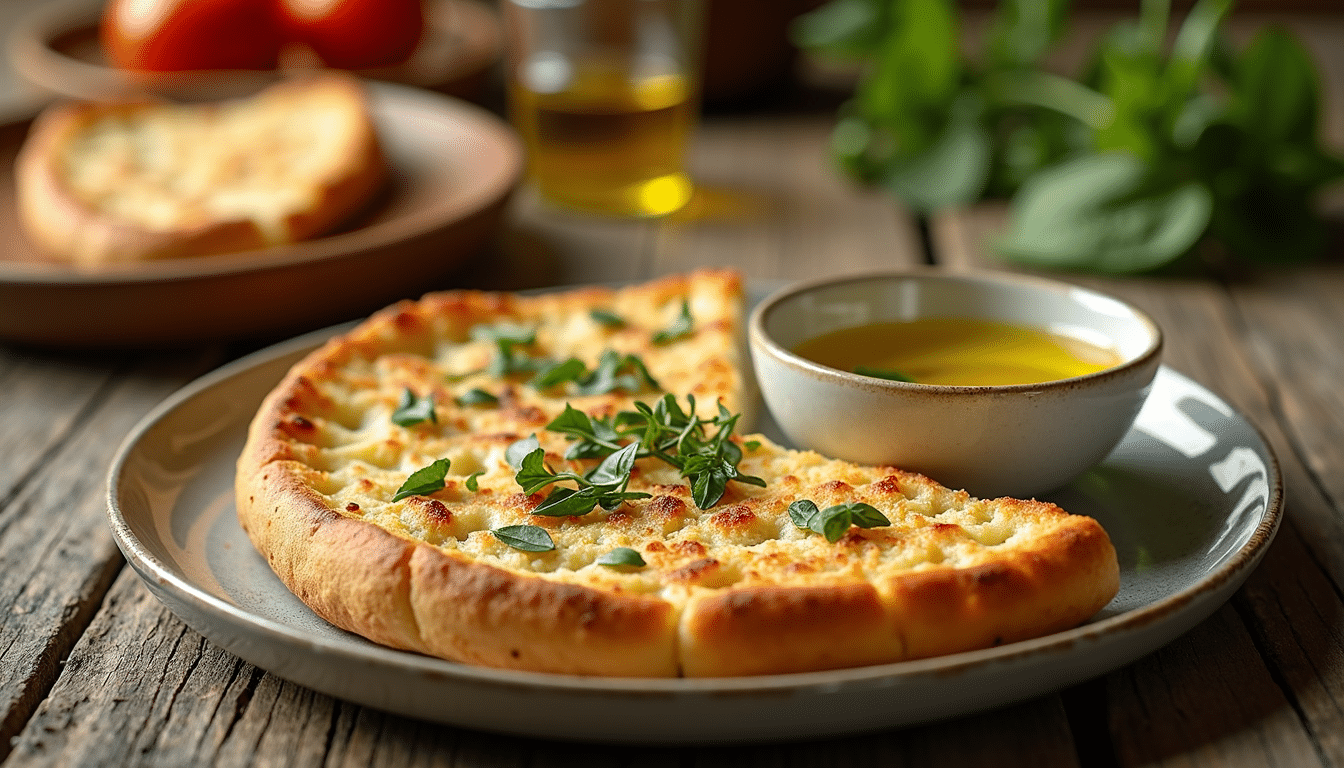
- Remove from the oven, drizzle with a little more olive oil, and cool slightly before slicing.
Frequently Asked Questions
Why is focaccia dough wetter than regular bread dough?
Focaccia uses a higher hydration dough to create larger air pockets and a lighter, more open crumb. This moisture also helps achieve a soft interior with a crisp olive-oil crust.
Do I need strong bread flour for focaccia?
Yes. Strong bread flour provides enough gluten strength to support fermentation and hold air, giving focaccia its structure without becoming dense.
Why is olive oil used so generously in focaccia?
Olive oil prevents sticking, enhances flavor, and helps create focaccia’s signature golden, crisp exterior while keeping the inside tender.
Can focaccia dough be cold-proofed?
Absolutely. Cold-proofing the dough overnight in the refrigerator improves flavor development and can result in a more complex, aromatic bread.
How should focaccia be stored after baking?
Focaccia is best eaten fresh but can be stored at room temperature for up to 24 hours. For longer storage, freeze once fully cooled and reheat before serving.