
Steak Doneness Chart (Internal Temperature Guide)
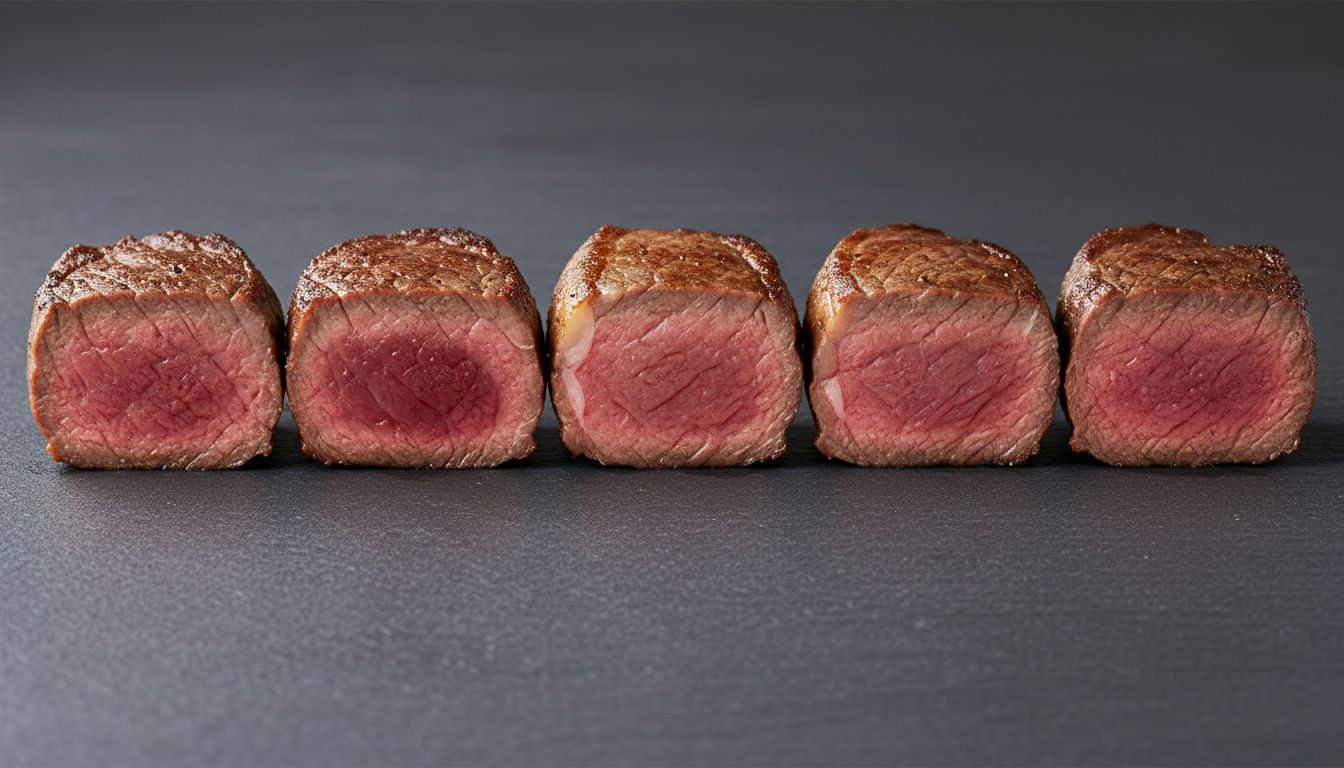
Fahrenheit and Celsius.
Steak doneness is determined by internal temperature and texture, not just cooking time.
Use the chart below to identify the correct steak doneness from rare to well done, with
temperatures shown in both Fahrenheit and Celsius. Professional chefs like
Gordon Ramsay rely on high heat, touch, and proper resting to achieve
perfectly cooked steak.
| Doneness Level | Internal Temp (°F) | Internal Temp (°C) | Center Color | Texture |
|---|---|---|---|---|
| Rare | 120–125°F | 49–52°C | Bright red, cool center | Very soft |
| Medium Rare | 130–135°F | 54–57°C | Warm red center | Soft, springy |
| Medium | 140–145°F | 60–63°C | Pink center | Firm with slight give |
| Medium Well | 150–155°F | 66–68°C | Faint pink | Firm |
| Well Done | 160°F+ | 71°C+ | Brown throughout | Very firm |
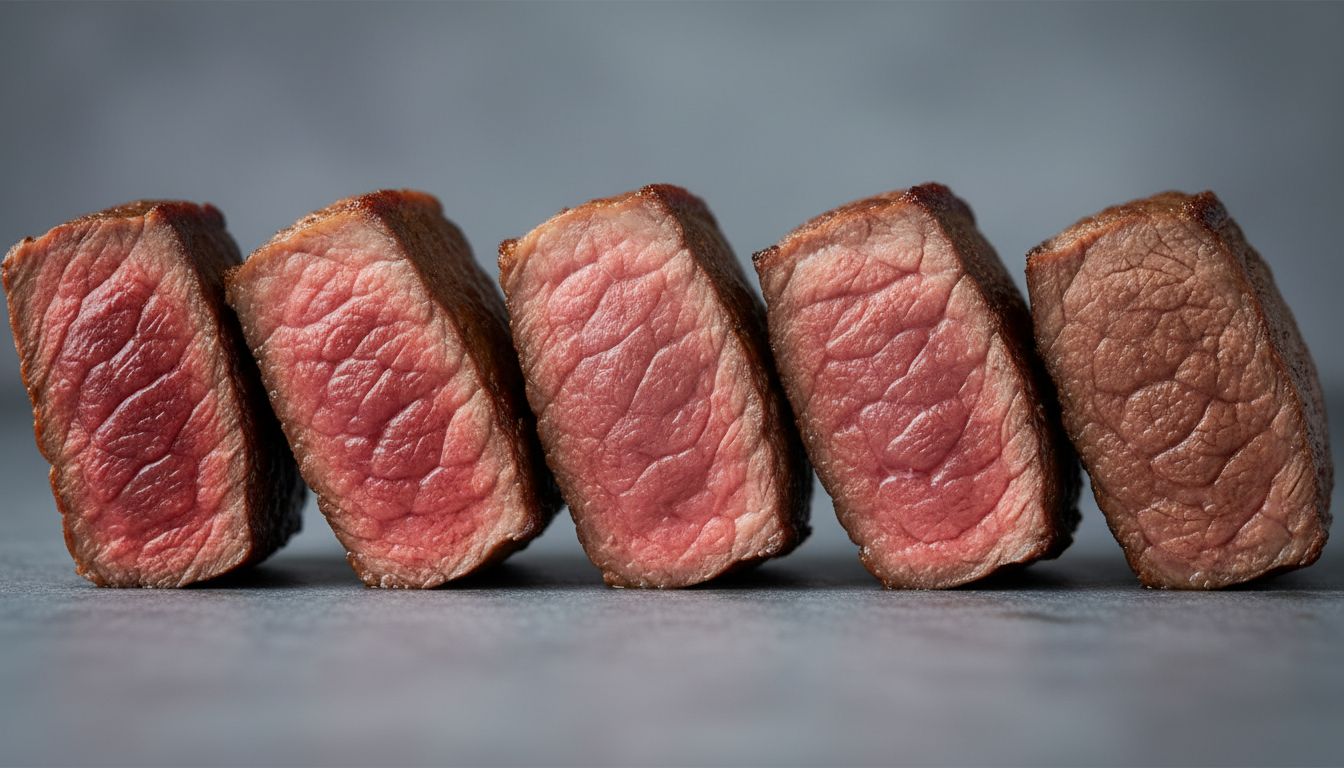
level.
Note: Steak continues cooking by approximately 5–10°F (2–5°C) while
resting. Remove it from heat slightly before reaching your target temperature to avoid
overcooking.
How Gordon Ramsay Tests Steak Doneness (Without a Thermometer)
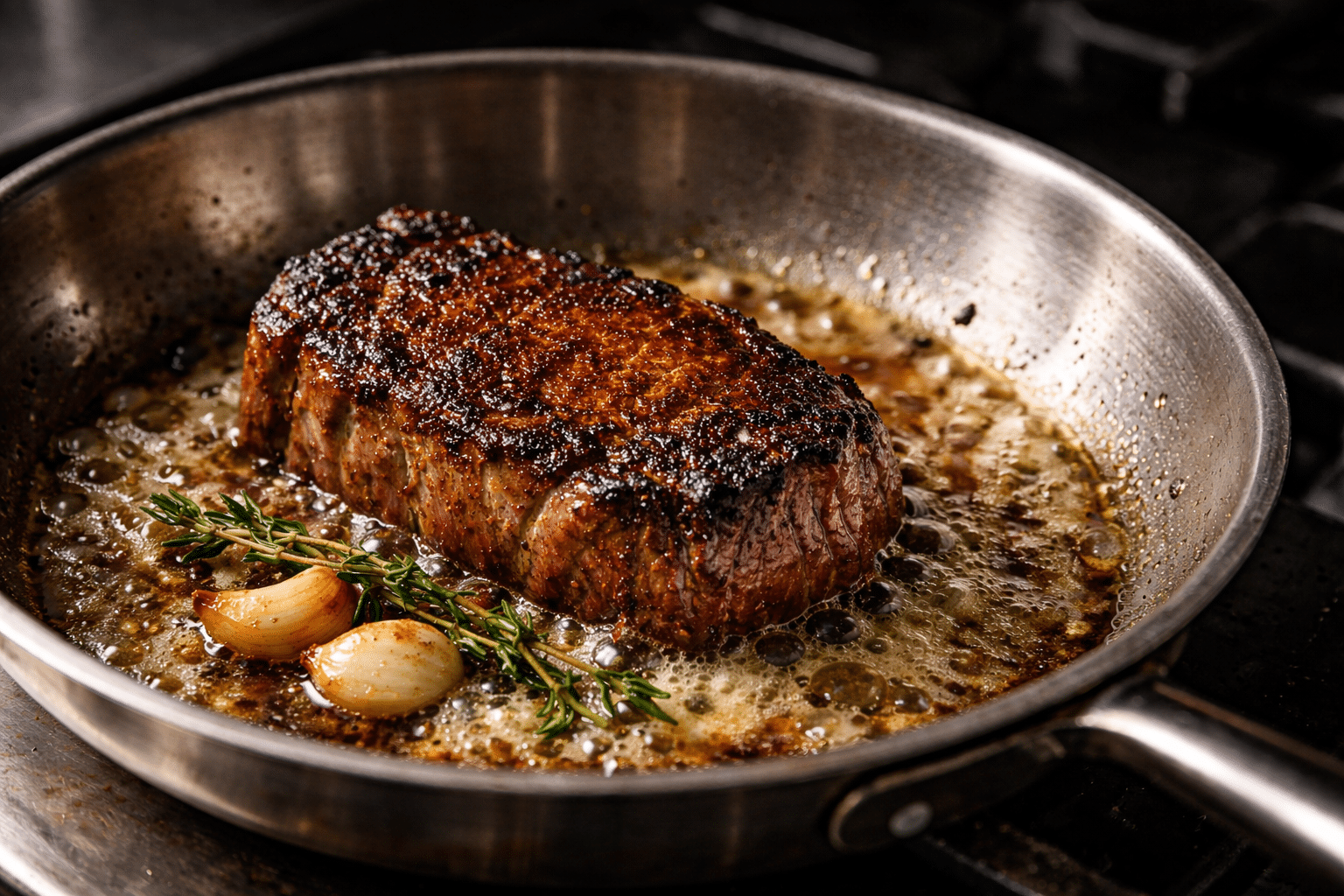
reaches the desired doneness.
Professional chefs like Gordon Ramsay don’t rely on thermometers alone
to judge steak doneness. Instead, they use a combination of touch, resistance, heat
awareness, and timing to determine when a
steak is perfectly cooked.
The Finger Test (Touch & Resistance)
Press the center of the steak gently with your finger or tongs. A rare steak will feel
very soft and spongy, while a medium-rare steak springs back slightly when pressed.
As doneness increases, the steak becomes firmer with less give.
Heat Awareness & Timing
Ramsay emphasizes cooking
steak over high heat to build a proper crust
quickly. Once seared, he relies on instinctive timing rather than fixed minutes.
Resting Before Cutting
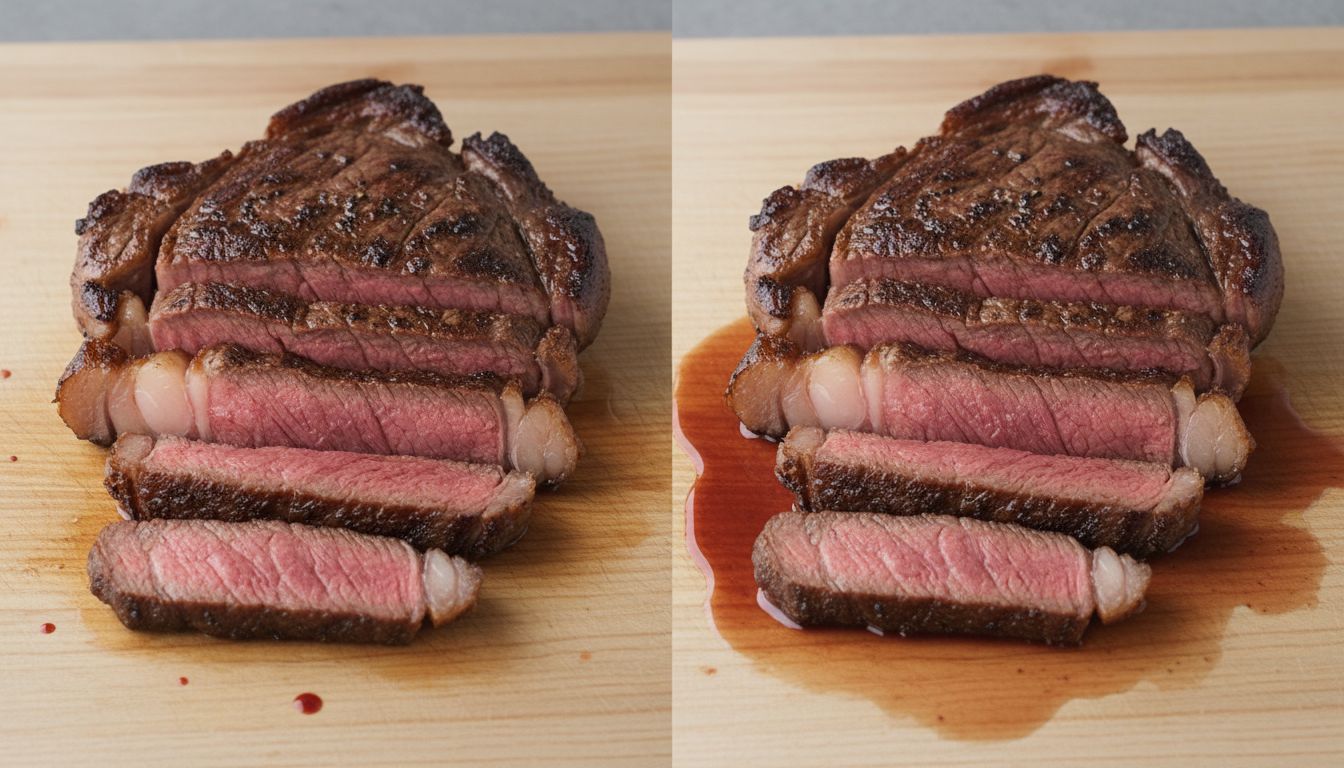
Steak continues to cook after leaving the pan. Resting allows juices to redistribute
and internal temperature to stabilize. Cutting too early can make even a perfectly
cooked steak lose moisture and appear overdone.
Medium Rare Steak
A medium-rare steak is cooked to an internal temperature of
130–135°F (54–57°C). It has a warm red center, a well-developed crust,
and is widely considered the ideal doneness for most steak cuts.
- Internal Temperature: 130–135°F (54–57°C)
- Visual Cue: Deep brown crust with a red, warm center
- Texture: Soft and springy when pressed
- Flavor: Juicy, beef-forward, and tender
Gordon Ramsay recommends medium-rare for cuts like ribeye
and sirloin because the fat has time to render while the meat remains juicy.
Common Steak Doneness Mistakes
Cutting Steak Too Early
Slicing steak immediately after cooking causes juices to escape. Always rest steak for
at least 5 minutes before cutting.
Cooking Steak at Low Heat
Low pan heat prevents proper crust formation and leads to uneven doneness.
Ignoring Carryover Cooking
Steak continues cooking after leaving the pan. Pull steak slightly early.
Pressing Steak While Cooking
Pressing steak forces juices out and reduces tenderness.
Steak Doneness FAQs
What is the best steak doneness?
Medium-rare balances tenderness, juiciness, and flavor.
Why is medium-rare steak recommended?
It allows fat to render while keeping the meat juicy.
Does steak keep cooking while resting?
Yes. Steak continues cooking by about 5–10°F (2–5°C).
Should you press steak while cooking?
No. Pressing steak releases juices and reduces tenderness.